Complete Guide to Modern BBQ Charcoal Production Line from Raw Materials to Finished Product
- lee784287
- 6月10日
- 讀畢需時 3 分鐘
Barbecue charcoal remains a popular fuel choice for grilling enthusiasts worldwide. Understanding how modern BBQ charcoal is produced reveals the careful process behind the convenient briquettes or lump charcoal we use. This guide walks through the entire production line, from raw materials to the finished product, highlighting key steps and equipment involved in creating high-quality charcoal for BBQ use.
Raw Materials Selection
The production of BBQ charcoal begins with choosing the right raw materials. Hardwood is the preferred source due to its density and ability to produce long-lasting, hot-burning charcoal. Common woods include oak, hickory, maple, and beech. These woods have low resin content, which helps avoid unpleasant odors and excessive smoke during grilling.
Wood must be properly dried before processing. Moisture content ideally falls below 15% to ensure efficient carbonization. Some producers use wood chips, sawdust, or agricultural waste like coconut shells or bamboo, depending on regional availability and desired charcoal characteristics.
Carbonization Process
Carbonization transforms raw wood into charcoal by heating it in a low-oxygen environment. Modern BBQ charcoal production lines use industrial carbonization furnaces or kilns designed for controlled pyrolysis. This process removes water, volatile compounds, and gases, leaving behind mostly carbon.
The carbonization temperature typically ranges between 400°C and 700°C. Maintaining consistent temperature and oxygen levels is crucial to produce charcoal with uniform quality and minimal ash content. Some advanced systems use continuous carbonization, where raw materials move through a heated chamber on a conveyor, improving efficiency and output.
Crushing and Screening
After carbonization, the charcoal is brittle and porous. It undergoes crushing to break it into smaller, uniform pieces suitable for BBQ use. Crushers or hammer mills reduce the charcoal size, while screens separate fine powder from larger chunks.
This step ensures the charcoal pieces are consistent in size, which affects burning time and heat output. Oversized pieces may burn unevenly, while too many fines can cause excessive ash and poor airflow in grills.
Briquetting and Shaping
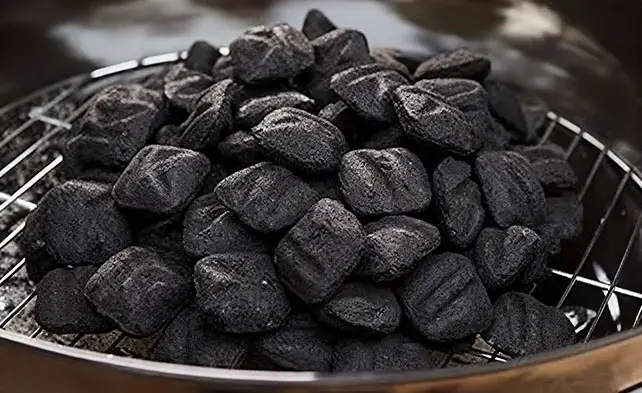
Many modern BBQ charcoal products come in briquette form for easier handling and consistent burning. Briquetting machines compress charcoal powder or small pieces with binders such as starch or molasses. The mixture is shaped into uniform blocks, cylinders, or pillow shapes.
This process improves the density of charcoal, allowing it to burn longer and produce steady heat. Some lines include drying ovens to remove moisture from briquettes, enhancing their shelf life and ignition properties.
Drying and Cooling
Both lump charcoal and briquettes require drying to reduce residual moisture. Drying ovens or rotary dryers gently heat the charcoal to remove water without igniting it. Proper drying prevents mold growth and improves combustion efficiency.
After drying, charcoal cools down before packaging. Cooling conveyors or chambers ensure the product is safe to handle and store.
Packaging and Quality Control
Packaging protects charcoal from moisture and contamination. Modern lines use automated packing machines that fill bags or boxes with precise amounts of charcoal. Packaging materials often include moisture barriers and resealable features for consumer convenience.
Quality control checks occur throughout the production line. Tests measure moisture content, ash percentage, fixed carbon content, and burning time. These parameters ensure the charcoal meets industry standards and customer expectations.
Environmental Considerations
Modern BBQ charcoal production increasingly focuses on sustainability. Using renewable raw materials like agricultural waste reduces deforestation. Advanced carbonization systems capture and reuse gases released during pyrolysis, lowering emissions.
Water and energy consumption are optimized through recycling and efficient equipment design. Some producers implement certifications to demonstrate environmental responsibility.
Summary
The modern BBQ charcoal machine involves several carefully controlled steps:
Selecting and drying hardwood or alternative raw materials
Carbonizing wood in controlled furnaces to create charcoal
Crushing and screening charcoal for uniform size
Briquetting charcoal powder with binders for consistent shapes
Drying and cooling to improve quality and safety
Packaging with moisture protection and quality checks


留言