How Biochar Equipment Supports Sustainable Agriculture
- lee784287
- 2025年10月10日
- 讀畢需時 2 分鐘
Biochar equipment plays an increasingly vital role in advancing sustainable agricultural systems. By converting agricultural residues, forestry waste, and other forms of biomass into high-carbon materials, it contributes to soil revitalization, waste reduction, and carbon sequestration. The process aligns with global initiatives focused on regenerative farming and environmental preservation, creating long-term ecological and economic benefits for agricultural producers.
The Functionality Behind Biochar Production
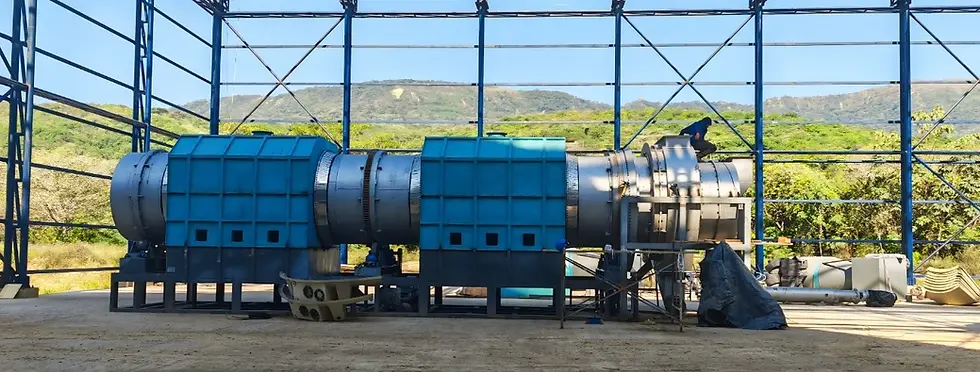
At its core, biochar equipment utilizes pyrolysis—a thermochemical conversion process conducted under limited oxygen conditions. During this phase, organic materials decompose into stable carbon-rich solids, gaseous byproducts, and bio-oil. The resulting biochar exhibits a porous microstructure with remarkable adsorptive capacity. Such structural attributes make it ideal for improving soil texture, increasing water retention, and enhancing nutrient availability. The technological evolution of these systems now allows for continuous operation, energy recovery, and emissions control, ensuring cleaner and more efficient production cycles.
Soil Regeneration and Carbon Enrichment
One of the most profound agricultural applications of biochar lies in its ability to rejuvenate degraded soils. When integrated into farmland, biochar acts as a long-lasting soil amendment, improving cation exchange capacity and balancing pH levels. It provides a stable habitat for beneficial microorganisms, facilitating organic matter decomposition and nutrient cycling. This carbon enrichment not only enhances fertility but also boosts the resilience of crops against drought and nutrient leaching. Over time, the persistent carbon structure of biochar ensures that soil quality remains consistent, minimizing the need for synthetic fertilizers.
Reduction of Agricultural Waste Streams
Modern farms generate significant volumes of crop residues and organic byproducts. Without appropriate disposal methods, these materials can contribute to methane emissions or uncontrolled burning. Biochar equipment addresses this challenge by converting waste into a valuable agricultural input. Instead of being an environmental liability, residues such as rice husks, corn stalks, and coconut shells become feedstock for biochar production. This approach transforms linear waste cycles into circular systems, allowing farmers to extract additional value from their operations while maintaining compliance with environmental regulations.
Mitigation of Greenhouse Gas Emissions
Sustainable agriculture relies heavily on practices that mitigate greenhouse gas emissions. The use of biochar contributes to this objective through carbon sequestration. The carbon embedded in biochar remains stable for hundreds or even thousands of years when incorporated into soil, effectively locking atmospheric carbon dioxide into a solid form. Furthermore, by replacing fossil-fuel-based soil amendments and improving fertilizer efficiency, it indirectly reduces nitrous oxide emissions. The integration of biochar equipment into rural energy systems also enables the recovery of syngas and bio-oil, both of which can be used as renewable energy sources.
Economic and Environmental Synergies
From an economic standpoint, biochar production offers multiple revenue streams. Farmers can reduce input costs, generate surplus energy, and market high-quality biochar products for horticultural or industrial use. Environmentally, it supports the dual objectives of improving productivity and restoring ecological balance. By merging waste valorization, soil health improvement, and carbon capture into a single operational framework, biochar equipment exemplifies the principles of sustainable agricultural modernization.
In essence, the integration of biochar into agricultural practice is not merely a soil management strategy—it represents a systemic transformation toward low-carbon, regenerative farming ecosystems.


留言